The deepest hole
The Kola Superdeep Borehole: the deepest hole ever dug
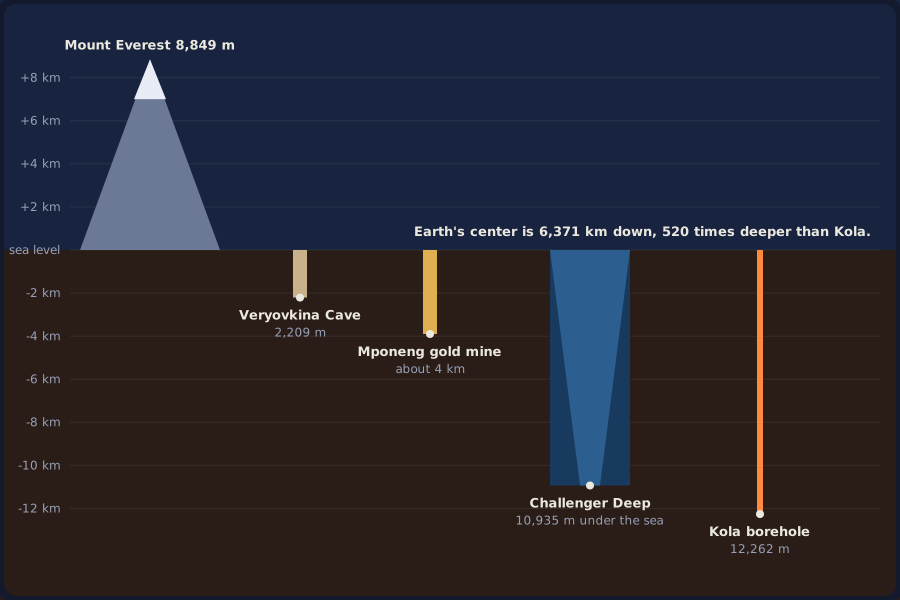
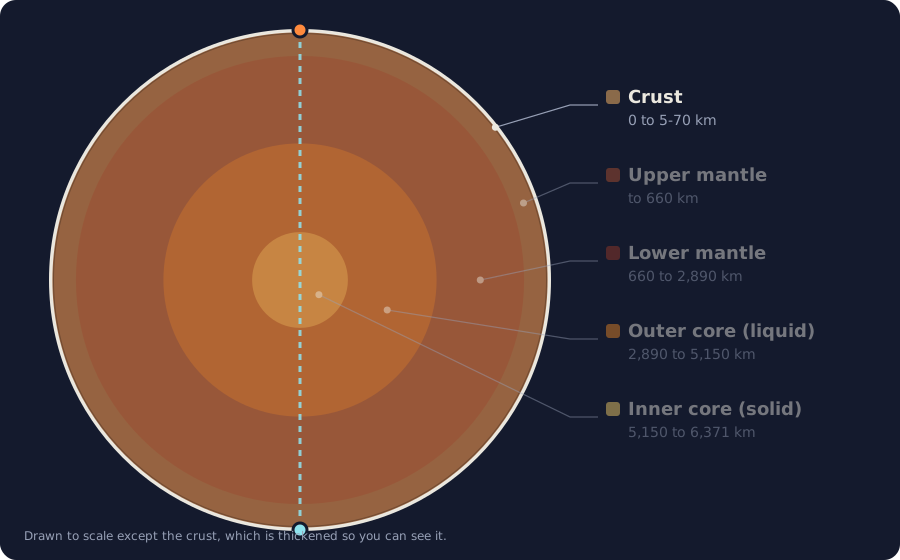
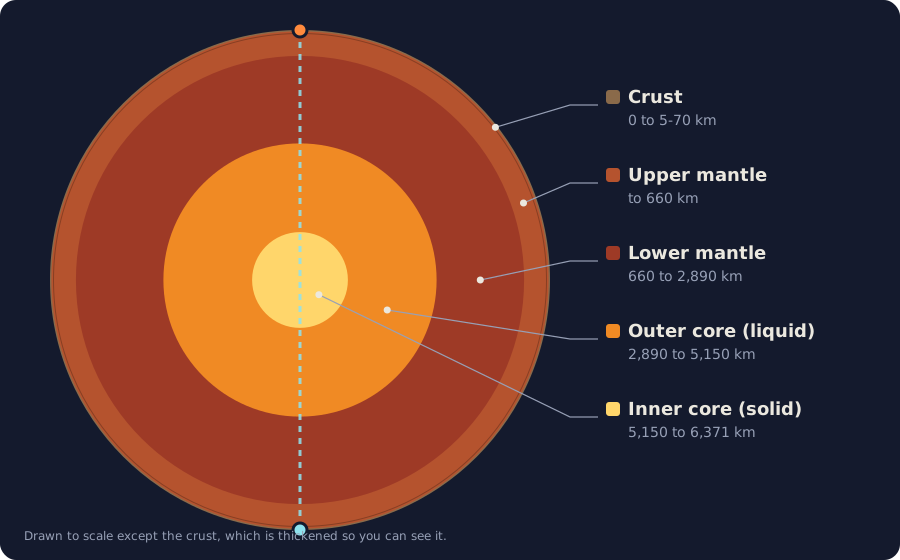
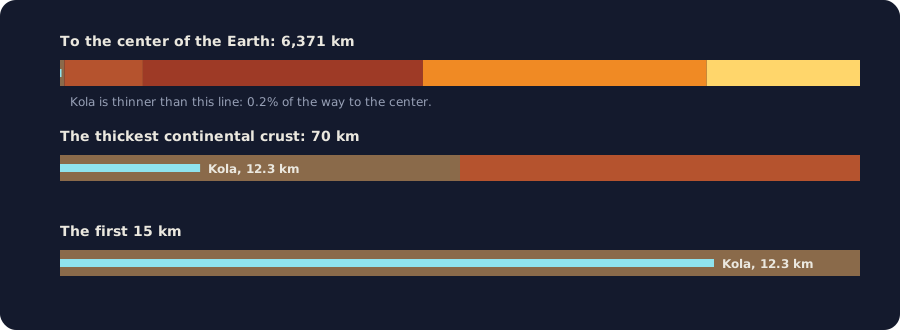
In 1970 Soviet scientists set out to drill as deep into the Earth as possible. Nineteen years later they reached 12,262 meters. It is still the deepest hole on the planet, and it covered about 0.2% of the distance to the center.
A race into the Earth
In the 1960s the United States and the Soviet Union competed in space, and briefly also underground. The American Project Mohole tried to drill through thin oceanic crust to reach the mantle and was cancelled in 1966. The Soviets chose a different target: the Kola Peninsula in the far northwest of Russia, near the Norwegian border, where some of the oldest rock in Europe lies at the surface.
Drilling began on 24 May 1970. The goal was 15,000 meters. The hole was only 23 cm wide, about the size of a dinner plate, and branched into several side holes over the years. In 1979 it passed the previous record, a 9,583 m gas well in Oklahoma. In 1989 the deepest branch, SG-3, reached 12,262 m.
What they found
- No basalt. Scientists expected to hit a switch from granite to basalt at around 7 km, based on earthquake data. It never came. The change in the seismic signal turned out to be granite that had been cracked and soaked with water under enormous pressure.
- Water, very deep. Free water was found 3 to 6 km down. It had been squeezed out of minerals and trapped by solid rock above, where nobody thought water could exist.
- Fossils 6 km down. The cores contained microscopic fossils of plankton, preserved in rock billions of years old.
- Boiling mud. The drilling mud came up bubbling with hydrogen gas.
- Heat. At the bottom the rock was 180 °C, much hotter than predicted. At that temperature the rock behaved more like plastic than stone and kept closing the hole.
Why they stopped
The heat made further drilling almost impossible: every time the drill was pulled out to change the bit, the soft hot rock flowed back in. Work on the last branch stopped in 1992, and in 1994 the project ran out of money after the collapse of the Soviet Union. The site closed in 1995 and was abandoned in 2008. Today the hole is sealed with a rusty metal cap in the middle of a ruined building, a popular stop for urban explorers.
The "well to hell" myth
In 1989 a story spread that Soviet engineers had drilled into hell and recorded the screams of the damned. It was a hoax that began in a Finnish newsletter and was retold on American Christian television. No such recording exists. The real findings were strange enough.
Has anyone gone deeper?
Longer holes exist. Oil wells in Qatar and on Sakhalin island in Russia now exceed 12 km and one reached 13.5 km in 2015. But they mostly run sideways, following oil layers, so they are longer, not deeper. In true vertical depth, Kola still holds the record, more than 35 years later.