Layer 1 of 4
The crust: the thin skin we live on
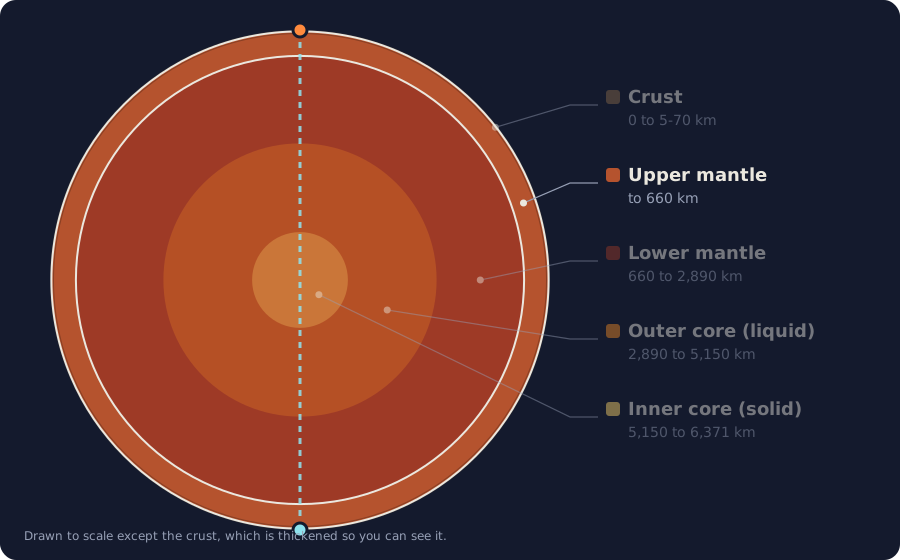
Everything humans have ever built, mined or drilled sits in a rocky shell thinner, relative to the Earth, than the skin of an apple.
Two kinds of crust
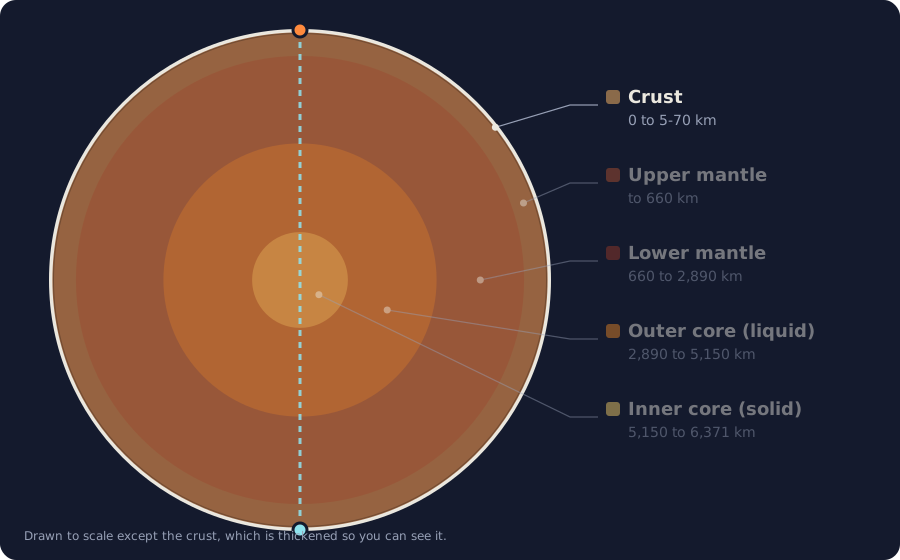
Oceanic crust covers the sea floor. It is 5 to 10 km thick and made mostly of basalt, a dark, heavy volcanic rock. It is constantly being made at mid-ocean ridges and destroyed where it sinks back into the mantle, so none of it is older than about 200 million years.
Continental crust is thicker, usually 25 to 70 km, and thickest under big mountain ranges like the Himalayas and the Andes. It is lighter, richer in granite, and it floats on the mantle like a raft, so it rarely gets recycled. Some of its minerals are more than 4 billion years old, nearly as old as the Earth itself.
What the crust is made of
Almost half of the crust by mass is oxygen, locked up in minerals. Next comes silicon, then aluminum, iron and calcium. The most common minerals are feldspars (about 41%), quartz (12%) and pyroxenes (11%). Gold, the reason people dig the deepest mines, is so rare that all the gold ever mined would fit in a cube about 22 meters on each side.
| Element | Share of the crust by mass |
|---|---|
| Oxygen | 46% |
| Silicon | 28% |
| Aluminum | 8% |
| Iron | 6% |
| Calcium | 4% |
It gets hot quickly
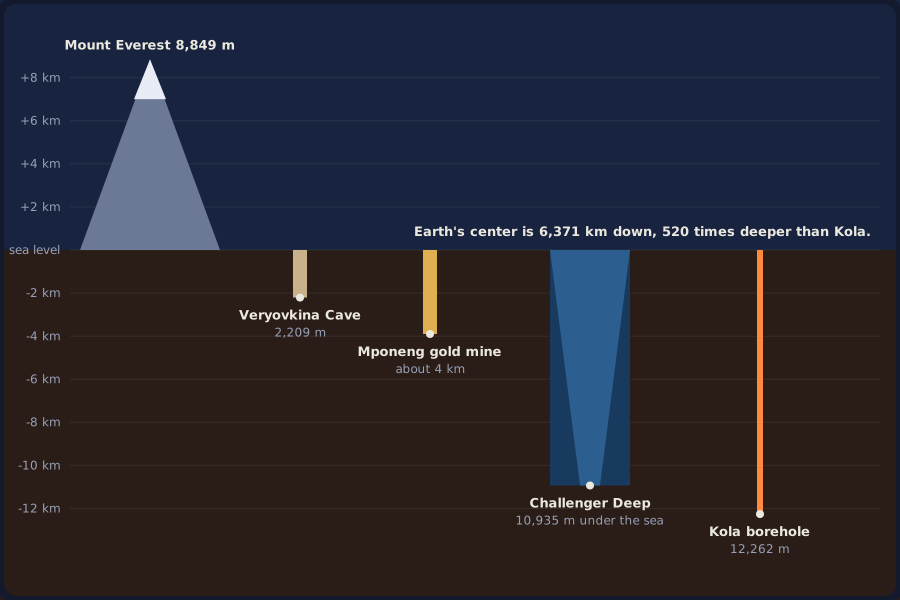
In the upper crust the temperature climbs by up to 30 °C per kilometer. That is why the deepest gold mine in the world, Mponeng in South Africa, has to pump ice slurry underground: the rock at 4 km is around 66 °C. At the bottom of the crust temperatures reach several hundred degrees, and under some continents more than 1,000 °C.
Where the crust ends
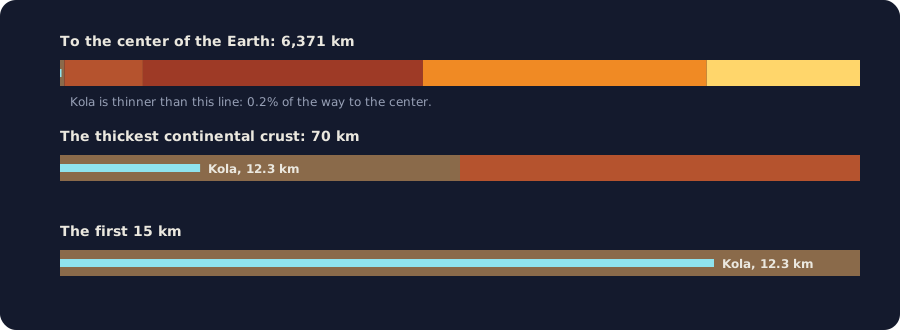
The crust stops at a sharp boundary called the Moho, short for the Mohorovičić discontinuity. In 1909 the Croatian scientist Andrija Mohorovičić noticed that earthquake waves suddenly speed up at a certain depth, which means the rock there changes. Below the Moho begins the mantle. No drill has ever reached it through continental crust; the Kola borehole gave up about a third of the way down.
Crust facts
- Share of the Earth's volume: less than 1%
- Average density: about 2.8 g/cm³, half that of the Earth as a whole
- Oldest rocks: about 4 billion years; oldest mineral grains: about 4.3 billion years
- Deepest point reached by people: about 4 km (mine); by a drill: 12.3 km (Kola)