Records
The deepest places humans have ever reached
People have climbed almost 9 km up Everest. Going down is much harder. Here are the deepest places we have reached, on foot, in a submarine and with a drill.
Deepest cave: Veryovkina, 2,209 m
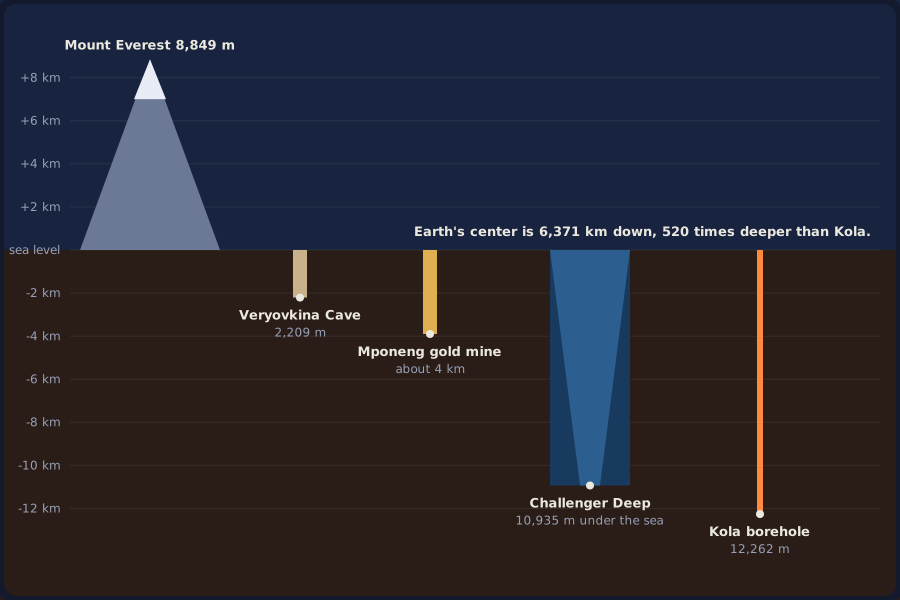
Veryovkina Cave lies in the Arabika Massif in Abkhazia, Georgia, in the western Caucasus. Cavers reach the bottom after days of rope descents, crawls and flooded passages. In 2024 a precise survey measured its depth at 2,209 meters, the deepest known cave on Earth.
Deepest mine: Mponeng, about 4 km
The Mponeng gold mine near Johannesburg in South Africa reaches about 4 km below the surface. The ride from the surface to the deepest level takes over an hour. The rock down there is about 66 °C, so the mine pumps ice slurry underground to keep the air below 30 °C. In 2008 scientists found a bacterium living alone in the hot groundwater, feeding on energy from radioactive rock. They named it Desulforudis audaxviator, "bold traveler", after a line in Jules Verne's Journey to the Center of the Earth.
Deepest ocean: Challenger Deep, 10,935 m
The Challenger Deep, in the Mariana Trench in the western Pacific, is the lowest point of the sea floor, about 10,935 m below sea level. Mount Everest would fit inside with more than 2 km of water to spare. Jacques Piccard and Don Walsh first reached it in 1960 in the bathyscaphe Trieste. Film director James Cameron went down alone in 2012, and explorer Victor Vescovo has made several dives since 2019.
Deepest hole: Kola, 12,262 m
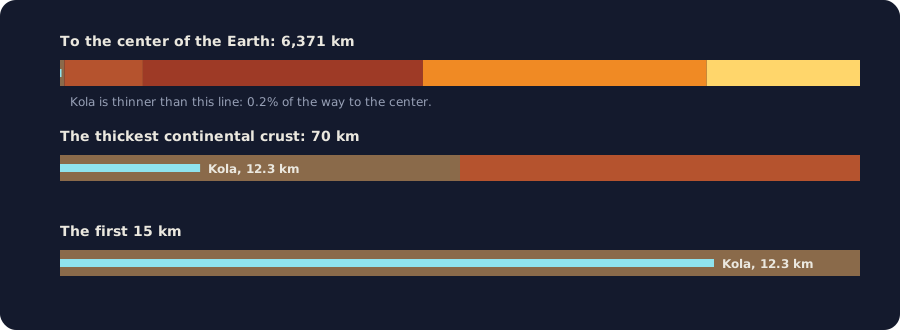
The Kola Superdeep Borehole in northwest Russia reached 12,262 m in 1989 and still holds the record for vertical depth. No person could go down it; the hole is only 23 cm wide.
And the center of the Earth?
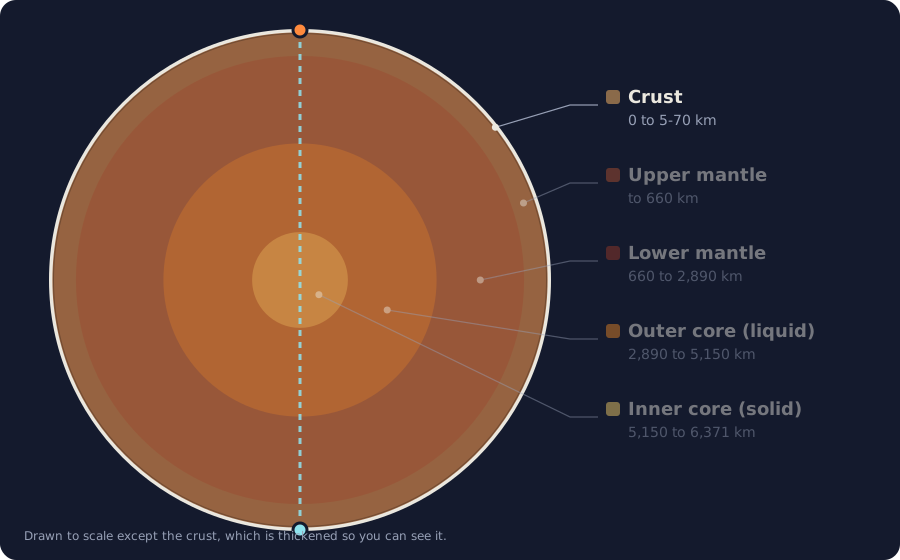
The center is 6,371 km down, roughly 520 times deeper than Kola. If the Earth were an apple, all of humanity's deepest holes would not get through the skin. On the home page you can dig the rest of the way.