Inside the Earth
The layers of the Earth, from crust to core
Dig straight down and you would pass through four very different worlds before reaching the center, 6,371 km below your feet. Here is what each one is like.
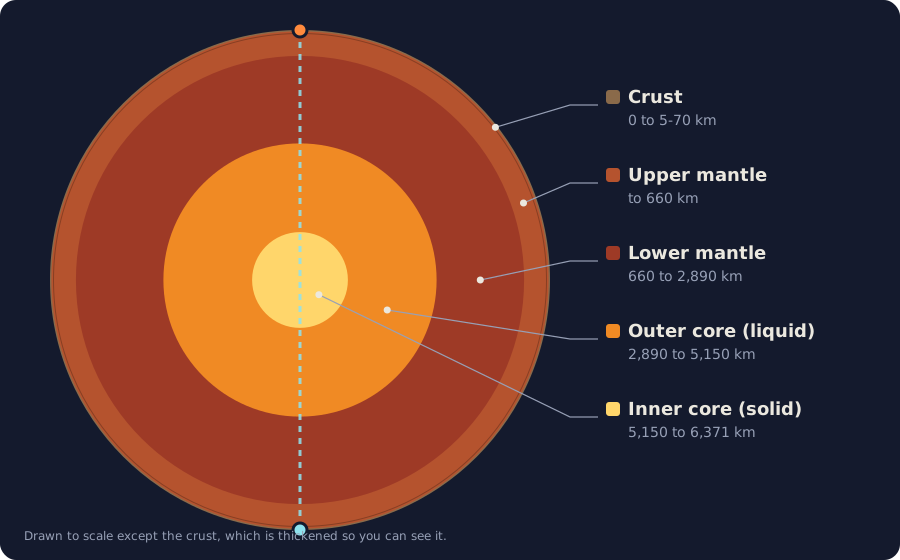
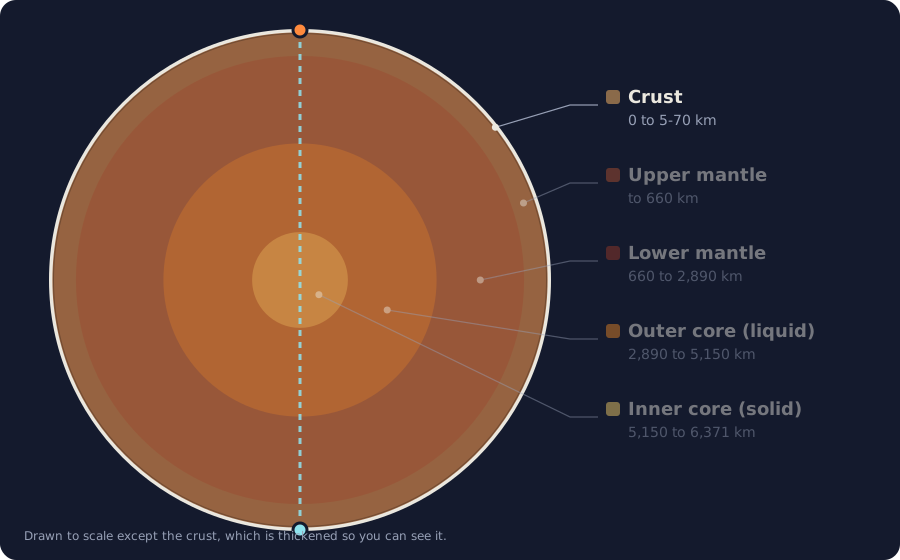
The Earth is not one solid ball. It is layered like an onion, and each layer has its own chemistry, temperature and behavior. Geologists split it up in two ways: by what the rock is made of (crust, mantle, core) and by how it behaves (rigid, slowly flowing, liquid or solid). This article follows the first split, which is also the order you would meet the layers with a shovel.
The four layers at a glance
| Layer | Depth | State | Made of | Temperature |
|---|---|---|---|---|
| Crust | 0 to 5-70 km | Solid, brittle | Granite (continents), basalt (ocean floor) | 15 °C to several hundred °C |
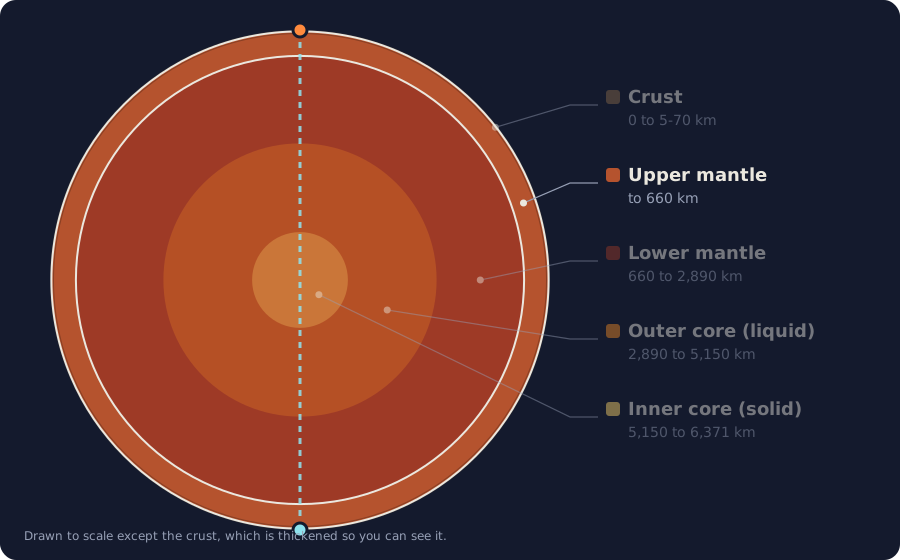
| Mantle | to 2,890 km | Solid, but flows very slowly | Peridotite rich in olivine | Up to about 3,900 °C |
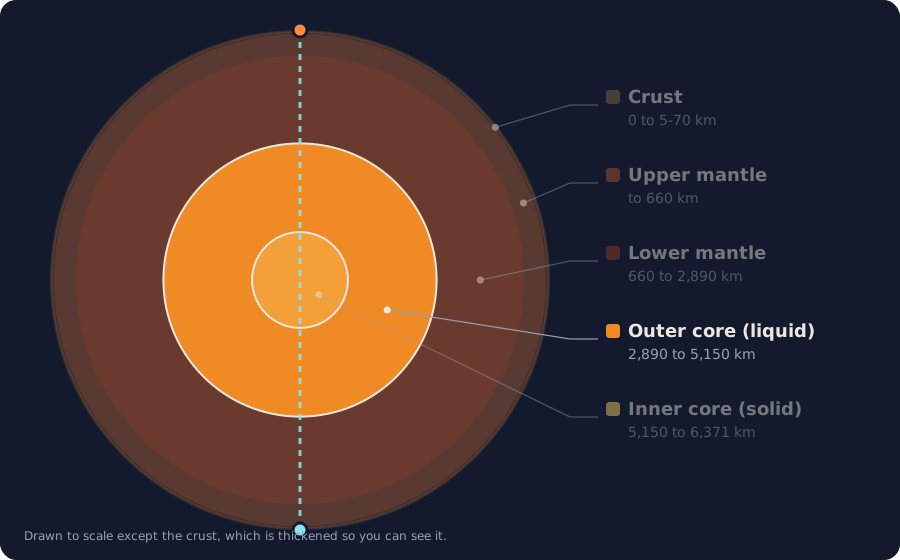
| Outer core | 2,890 to 5,150 km | Liquid | Iron and nickel | About 3,000 to 5,400 °C |
| Inner core | 5,150 to 6,371 km | Solid | Iron and nickel | About 5,400 °C |
Temperature: hot, hotter, as hot as the Sun
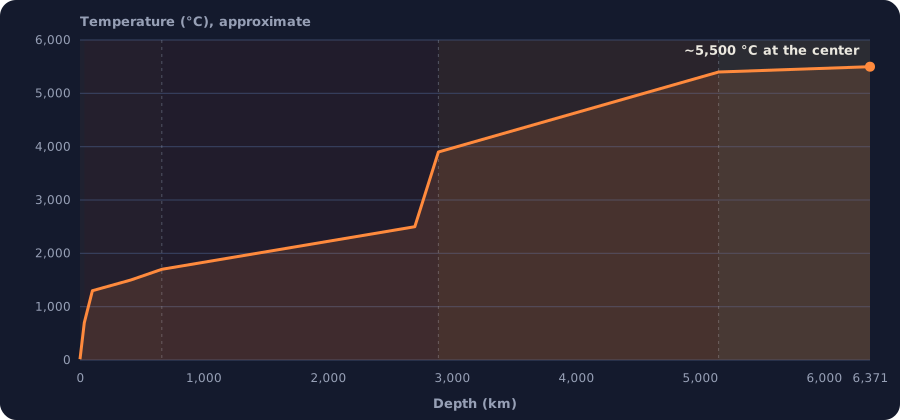
Heat rises fast near the surface, about 25 to 30 °C for every kilometer in the upper crust. Deep mines already hit rock at 60 °C. Further down the rise slows, then jumps again at the two big boundaries, where heat from the core leaks into the mantle. At the center the temperature is roughly 5,400 °C, about the same as the surface of the Sun.
Pressure: the reason the center is solid
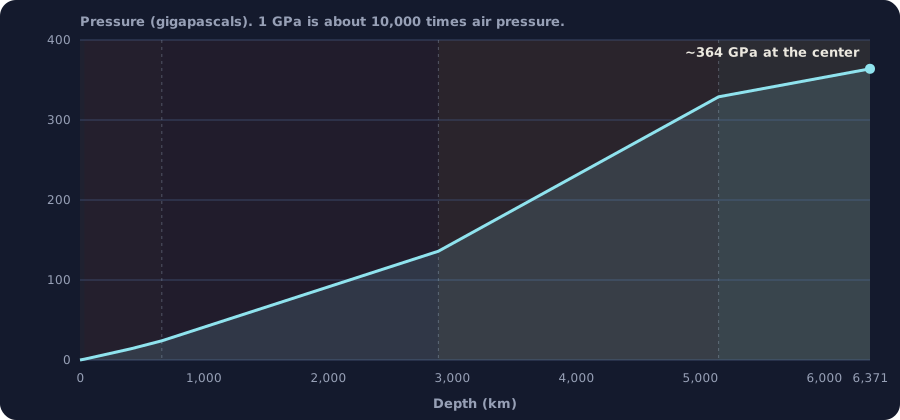
With every kilometer you add the weight of all the rock above you. At the core-mantle boundary the pressure is about 136 gigapascals, over a million times the air pressure at sea level. At the center it reaches around 364 GPa. That pressure explains the Earth's strangest feature: the inner core is hotter than the outer core, yet it is solid, because the squeeze raises the melting point of iron faster than the temperature rises.
By volume, the Earth is mostly mantle
The crust you live on is less than 1% of the planet's volume. The mantle makes up about 84% and roughly two thirds of the mass. The core is about 16% of the volume but a third of the mass, because iron is so dense. That imbalance was the first clue that the center is made of metal: the Earth as a whole weighs about twice as much as its surface rocks would suggest.
How do we know any of this?
Nobody has been deeper than about 4 km, and the deepest hole ever drilled, the Kola Superdeep Borehole, stopped at 12.3 km. Everything below comes from earthquake waves, lab experiments that squeeze metals to core pressures, meteorites, and the Earth's magnetic field. Read how scientists mapped the inside of the Earth for the full detective story.